Why the Market Doesn't Care What You Paid: The Psychology of Break-Even Investing
Discover why focusing on your average purchase price destroys returns. Learn how to master market psychology, volatility, and noise in investing.
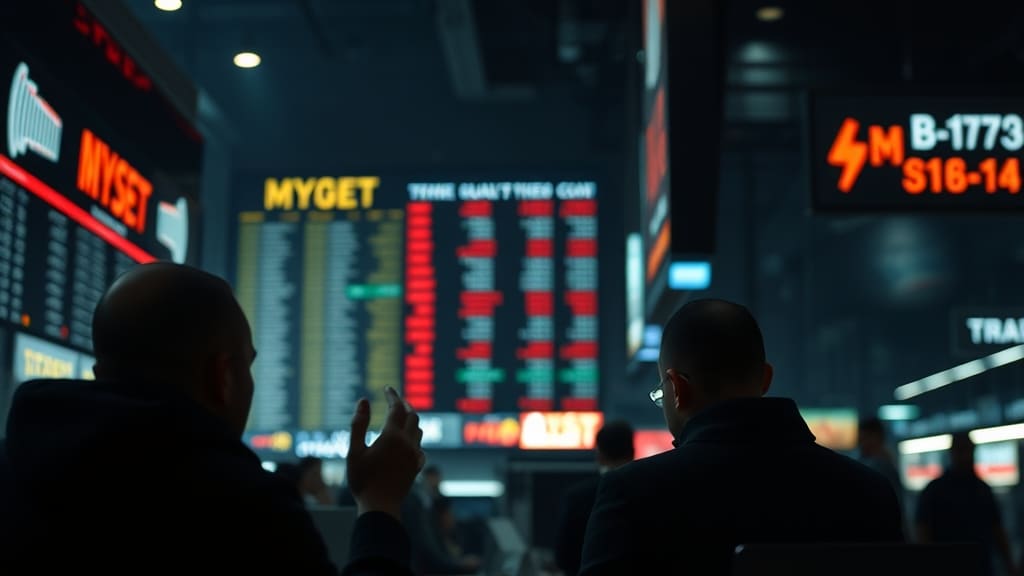
Just as calm seas never prove a navigator's true skill, the true character of a captain is revealed only amid raging storms. The vast ecosystem of the capital market is much like these giant waves, constantly testing the fragile psychology and intellectual limits of individuals.
Core Insights
1. Market Crowd Psychology and the Traps of Behavioral Economics
From an evolutionary standpoint, the human brain is wired to react sensitively to danger for survival. The instinct that once helped us flee from predators in prehistoric times is triggered identically when modern investors face falling stock price charts, stimulating the brain's amygdala. According to Prospect Theory, pioneered by Daniel Kahneman and Amos Tversky, humans feel the pain of a loss roughly 2 to 2.5 times more intensely than the joy of an equivalent gain. This asymmetric psychological response causes investors to experience extreme panic even during minor market fluctuations, ultimately paralyzing rational decision-making circuits. The 2010 Yeonpyeong Island bombardment incident—where investors attempted to dump Hong Kong stocks despite having zero geographical or economic connection to the event—stands as clear evidence of how irrational this primitive human fear can be. Market noise and public clamor are not merely transmissions of information; they act as powerful viruses that infect others with anxiety. A truly independent investor is one who embraces total isolation amidst this crowd madness and mass hysteria, fiercely guarding their center of gravity. The market is structured to systematically exploit the blind spots of those swayed by emotions and cleverly absorb their assets.
2. The Duality of Mr. Market and the Redefinition of Volatility
The metaphor of Mr. Market, conceived by Benjamin Graham and inherited by Warren Buffett, is the most perfect allegory capturing the essence of capital markets. Knocking on your door every morning to offer absurd prices or aggressively forcing you to buy or sell, this moody fictional character embodies the true nature of price volatility in the stock market. Rises and falls in asset prices do not occur because a company's intrinsic value drastically shifts every single second; rather, they are merely reflections of the manic-depressive psychological state of the human crowd participating in the market. Therefore, volatility is not a disaster to be avoided, but paradoxically, a profound blessing that provides opportunities to compound capital. If the market possessed zero volatility and continued an uninterrupted upward straight line, young adults and new investors looking to deploy fresh capital would be permanently deprived of the chance to buy assets at bargain prices. Volatility is the most powerful gift the market offers, serving as a self-correcting mechanism that brings asset prices back to reality when they temporarily deviate to extremes. Failing to see through this volatility and celebrating every short-term price swing while despairing over dips is no different from volunteering to become easy prey in the massive casino called the market.
3. The Boundary Between Corrections and Bear Markets with Strategic Responses
The ability to accurately diagnose and classify the nature of a stock price drop is a critical dividing line that determines survival. Drops of less than 10 percent that routinely occur in financial markets are nothing more than healthy breathers in an uptrend, commonly known as a Correction. This is an indispensable process that gently tempers overheated speeds and builds the foundational health of the asset, representing an area of opportunity that should be actively utilized. Conversely, a drop plunging 20 percent or more from peaks, entering a so-called Bear Market, signifies a structural crisis requiring strict risk management and a defensive stance. The historical etymology—where a Bull thrusts its horns upward to symbolize a rising market, and a Bear swipes its paws downward to represent a falling market—vividly illustrates this market dynamism. The problem is that the majority of investors mistake routine corrections for catastrophic bear markets, committing the fatal error of Panic Selling. We must remember that the exact moment of despair when stocks seem destined to fall forever—the very point where the crowd surrenders and abandons the market—has historically marked the prologue of the most powerful rebounds. Any decision made the moment emotion overpowers reason inevitably brings the bitter price of regret.
The market does not know how much you bought your stock for, and frankly, it doesn't care. Tying your selling strategy to your average cost basis is a recipe for endless regret.
4. Separating Signals from Noise and Philosophical Detachment
Adapting Claude Shannon's information theory to the capital markets, 99 percent of the information investors encounter is Noise that obscures the essence, while only a tiny fraction constitutes a true Signal capable of measuring an asset's value. Media outlets and mass channels continuously churn out sensational news to accelerate investors' heartbeats, making a fuss as if disaster will strike unless immediate action is taken. Yet all of this is merely an illusion generated by the giant machine of the market to manufacture liquidity. Truly great investors turn off their screens during market turbulence, reflect on their inner selves, and focus exclusively on a company's intrinsic value rather than price movements. As the Stoic philosopher Epictetus preached, what disturbs us is not the objective phenomenon of the market itself, but our subjective interpretation and judgment of that phenomenon. Therefore, doing nothing in the face of market volatility and chaos often serves as the most complete and wise strategy. Is the fear and euphoria of this moment you are facing merely passing noise within the grand flow of history, or is it a true signal fundamentally shaking your wealth?
This post is based on content from the YouTube channel 이효석아카데미.
Watch the original video: https://youtu.be/cunCAeee2AM
Note: This content is a column written with AI analysis based on the referenced video. For accurate context and the creators intent, we recommend watching the video via the link above.

