Market Analysis: Unlocking Contrarian Investment Opportunities Amid Extreme Pessimism
Explore a contrarian perspective on current market downturns driven by geopolitical tensions, interest rates, and macro uncertainty.
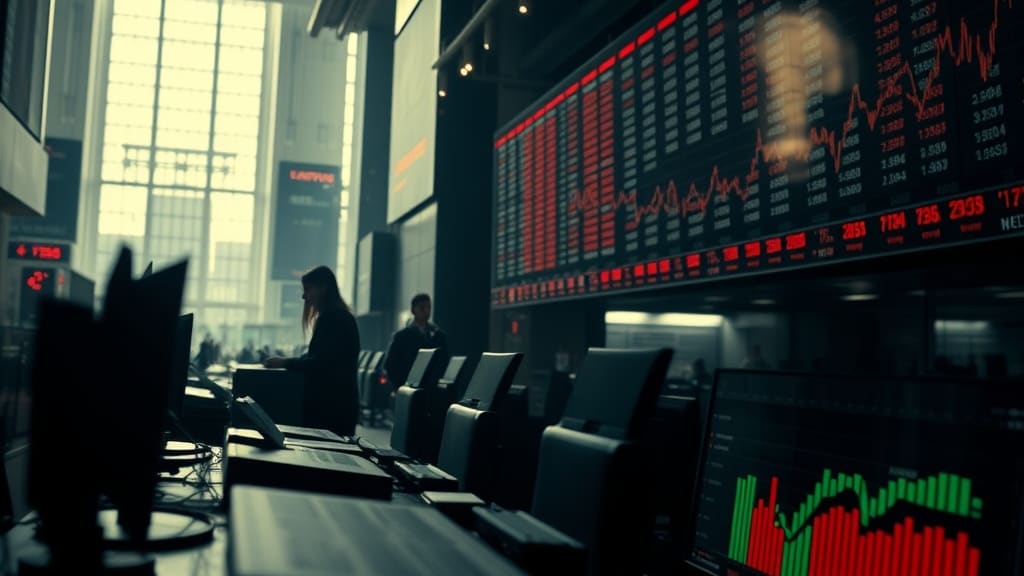
Just as a single pebble thrown onto a tranquil water surface creates massive ripples, the echoes of gunfire in a remote corner of the globe now pierce the very heart of the global capital markets. What exactly are we witnessing today?
Core Insights
1. Uncontrollable Variables and Market Contraction
Historically, the market has loved predictability and utterly detested uncertainty. The unexpected fuse of military conflict in the Middle East has escalated far beyond simple localized friction, turning into a massive typhoon that shakes the very foundation of global supply chains and energy security. The battles surrounding the Strait of Hormuz and concerns over crude oil supply disruptions immediately drive up energy prices—the lifeblood of the real economy—acting as a boomerang that reignites inflationary pressures. This serves as a classic example of an externality in economics, where physical conflicts between nations force involuntary losses that erode asset values regardless of individual economic agents' decisions. In such a phase, the capital market temporarily suspends its rational price-discovery function and transforms into an experimental ground for herd mentality dominated by primitive fear and survival instincts. Overwhelmed by the gigantic shadow of imminent geopolitical catastrophe rather than temporary economic indicator strength or corporate micro-fundamentals, the masses drastically reduce their exposure to risk assets and scramble for safe havens. Ultimately, the market decline should be properly understood not merely as price adjustment, but as an inevitable entropy increase phenomenon occurring as systemic risk materializes.
2. The Law of Financial Gravity and the Counterattack of Interest Rates
Just as the law of gravity pulls everything down to earth, in the world of macroeconomics, interest rates reign as the absolute gravity governing all asset prices. The surge in oil prices inevitably stimulates expected inflation, constrains the central bank's monetary policy flexibility, and pushes upward pressure on Treasury yields. When 10-year and 30-year bond yields race toward psychological barriers, it triggers a massive tectonic shift that lifts the baseline of all risk premiums—including stocks, real estate, and commodities—far beyond mere bond market volatility. In an environment where the time value of money surges, high-growth technology stocks and innovative assets based on distant future cash flows become the primary targets for liquidation. As the opportunity cost of capital rises, massive liquidity pours like a flood back into the bond market where investors can safely earn interest income, leaving the stock market exposed to the barren seabed left by the receding liquidity tide. This phenomenon maximizes the loss aversion bias pointed out by Daniel Kahneman, pushing investors to trigger an extreme defense mechanism called panic selling instead of rational holding. Rising interest rates mean a rise in the cost of capital, acting as an invisible predator that devours companies' profit-generating capabilities and forces a full re-evaluation of overall valuations.
3. The Disconnect Between Political Rhetoric and Realpolitik
The flashy rhetoric and political pledges of leaders are merely temporary painkillers meant to soothe public anxiety, falling short of becoming Alexander's sword that cleanly cuts through the massive currents of complex international relations. When political leadership, which once proclaimed the end of wars and posed as guardians of peace, ultimately opts for military actions in pursuit of power and security interests, that disconnect delivers a fatal sense of betrayal and additional uncertainty to the market. In the political landscape ahead of elections, security issues and military tensions are often utilized as double-edged swords to rally the public, but from the perspective of the capital markets, these are nothing more than toxic variables that vertically spike the unpredictability index. Trump-style unpredictable decision-making and the immediate retaliation cycle of counterpart nations carry the risk of cementing a long-term structural confrontation rather than a short-term clash. Geopolitical risk inflicts direct and indirect blows on corporate operating environments and global supply chain stability, prompting multinational corporations to abandon globalization tendencies and rush into defensive supply chain reorganizations such as reshoring or friend-shoring. Such geopolitical fractures transform the efficiency-centric world economy into a cost-centric fragmented economy, acting as the main culprit behind cementing long-term inflation pressures. Ultimately, the mismatch between political rhetoric and military reality reminds market participants of the harsh geopolitical reality, acting as a mechanism that institutionalizes the risk premium.
4. Contrarian Opportunities Blooming in the Valley of Pessimism
Moments of terror when public pessimism reaches its peak and the world feels like it is collapsing paradoxically become a festival where the capital market presents its most attractive price tags. As the adage goes, even when blood is running in the streets and distressed assets overflow, true masters of the game smell that fear and gaze into the essence of value with cold-headed rationality. The process of stock indices testing major support lines, forming double-top patterns, and undergoing repeated corrections is a natural purification process where unsound assets are weeded out from the market and true blue-chip assets regain their undervaluation appeal relative to value. Only investors who withstand the pain of short-term volatility and time-correction earn the qualification to harvest true rewards at inflection points where options expiration dates and seasonal fluctuations ease. Even minor slowdowns in macroeconomic indicators and cooling signs in the labor market require a contrarian view, interpreting them as the foothold of a blessing in disguise since they can alleviate the central bank's tightening stance. Throwing everything away in your portfolio while buried in pessimism is no different from the foolishness of jumping out of a ship in fear of shaking water droplets while failing to see the prelude of a massive wave. Historically, crises have always brought new wealth redistribution, and today's geopolitical storm is merely one process of intense growing pains through which capitalism builds its own immunity. Do we possess the discernment to recognize the dawn of opportunity that will generate future wealth behind this massive curtain of pessimism?
- Identify undervalued blue-chip assets during market panics
- Maintain a contrarian mindset amidst widespread geopolitical fear
- Focus on long-term fundamental value rather than short-term macro noise
"Moments of terror when public pessimism reaches its peak and the world feels like it is collapsing paradoxically become a festival where the capital market presents its most attractive price tags."
This post is based on content from the YouTube channel 올랜도 더 미국주식.
Watch the original video: https://youtu.be/xUwH3gizN4s
Note: This content is a column written with AI analysis based on the referenced video. For accurate context and the creators intent, we recommend watching the video via the link above.

