Is the US AI Data Center Boom Repeating Korea’s Legoland Financial Crisis?
Discover how the US AI data center infrastructure boom mirrors past real estate PF and financial crises, driven by leverage and tech hype.
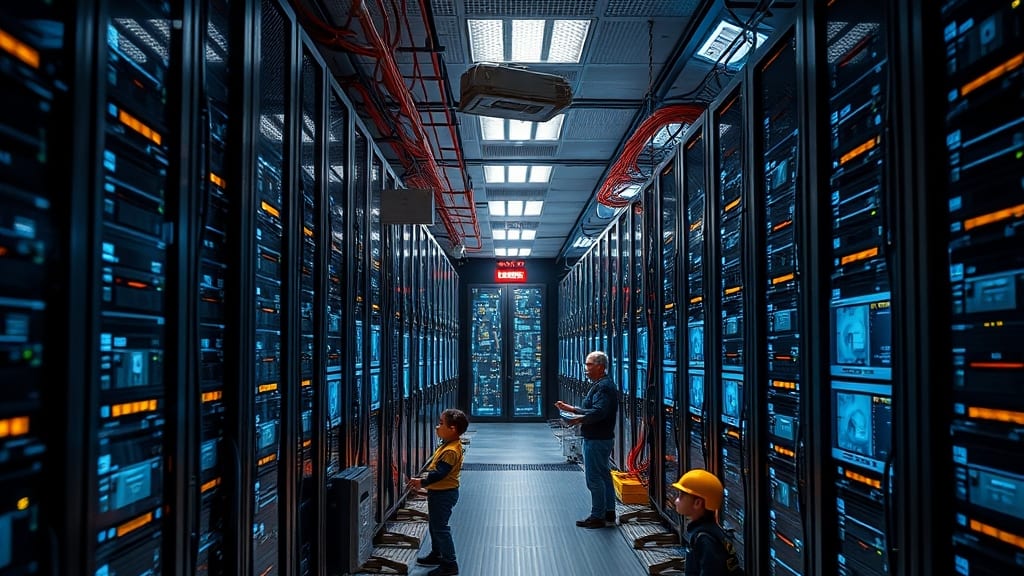
Those who slaughter the goose that lays the golden eggs always live within a narrative called greed. Behind the dazzling blueprints painted by modern Silicon Valley, the ghosts of the past that once shook Korea's bond market are reviving with chillingly precise form.
Core Insights
1. The Bizarre Resilience: The Ghost of 2008 Wears Silicon
Economist Joseph Schumpeter named the essence of capitalism creative destruction. The process in which old systems break down and new values are born inevitably accompanies debt, and in this process, finance acts as the heart circulating blood. Real estate project financing (PF) systems were just like this. Since it is nearly impossible to change the skyline of a massive city solely with pure equity, leveraging future cash flows to pull in present resources was a necessary evil and a great invention of modern capitalism. Buying land, raising rebar, and filling tenants to generate profits is not a sin in itself. The essence of the problem lies not in the system, but in the distorted desires of humans handling it. The illusion of a zero vacancy rate and the short-term indicator of soaring rents stimulate herd mentality and act as catalysts that destroy rational risk-management lines. The reckless loan expansion and chain of guarantees that hit Korea's construction sites in the early 2010s were by no means accidental. It was the unavoidable price paid by the market when the hallucination of perfect business viability dominates. And today, this exact alchemy of capital is replicating the artificial intelligence infrastructure market—praised as the most cutting-edge domain—across the Atlantic in the US mainland. Despite the limits of power grids and astronomical initial costs, a giant debt pyramid collateralized by server chips and physical space is quietly yet steeply piling up.
2. The Shadow Behind the Ledger: Monsters Born of Guarantees and Ghost Debt
One of the most sophisticated inventions of modern financial engineering is the technology of making risk invisible from sight. Nominal companies like Special Purpose Vehicles (SPVs) or Project Financing Vehicles (PFVs), which can pull in astronomical funds without directly hitting a company's financial statements, have been praised as tools to maximize capital flexibility. However, behind this transparent veil grows a ticking time bomb waiting to explode. The cutting-edge computing infrastructure construction sites led by transnational Big Tech corporations bear a striking resemblance to the accounting books of ghost companies. The funds required to build a single data center far exceed the scope of simple corporate loans. Capital from private equity, pension funds, and traditional banks intertwines like a spiderweb through a detour called private credit. In this process, the nominal entity is the main agent of actual credit creation, but the final leash is held by blind faith in lease agreements and future demand. When initial demand explodes and rents skyrocket, this complex structure simply looks like a perfect symbiotic ecosystem. Loans are repaid on time, investors cheer, and anthems of new wealth creation fill Yeouido and Wall Street.
However, the vulnerability of the structure is nakedly revealed the moment even a single link slips.Originally, debt serves as a lever for growth within an affordable range, but uncontrolled leverage conversely becomes a giant weapon crushing assets. The massive guarantees and chain debt links hidden behind the ledger hold the potential to suddenly transform into hosts of an epidemic paralyzing the entire financial system the moment a cold wind blows through the market.
3. The Invisible Collateral: A Fluid Sandcastle Called Computing Performance
The collateral in the real estate market is concrete. Whether it is a building in Gangnam or bare land in a regional area, it is a substance that can be touched by hand and occupies physical space. On the other hand, the assets collateralized by the high-tech computing industry are extremely fluid and change by the minute. Intangible values like graphics processing units and AI computing power cannot even be measured by traditional appraisal formulas. The reality of this field is that a chip boasting top performance today becomes an obsolete relic tomorrow in terms of power efficiency and computing speed. Therefore, a fundamental question is raised about how solid the financial structure built upon these fickle silicon pieces and the rental income of physical server rooms really is. The physical assets of data centers can easily turn into massive white elephants. The moment a new architecture emerges and an innovative chip that drastically reduces power consumption dominates the market, the value of older data centers built with astronomical debts in the past faces a path of plummeting prices. Current statistics showing soaring rents and near-zero vacancy rates are likely signals of a temporary overheating period that cannot last forever. As Schumpeter pointed out, technological innovation ruthlessly renders existing capital obsolete.
- New architectures quickly render older hardware obsolete.
- Rapid depreciation threatens the overall value of physical data centers.
- Unforeseen technological shifts transfer massive capital losses to unsuspecting investors.
4. The Power Bottleneck and the Crossroads of the Second Half: Where is the Bubble Heading?
To use a baseball metaphor, about which inning is this massive infrastructure investment craze currently passing? To call it the 2nd inning, countless capitals and players have already jumped into the game; to call it the 7th inning, they are still lined up to buy land, tied down by physical bottlenecks such as grid connections. The phenomenon where construction is delayed and contracts are canceled due to the failure to secure transmission and distribution lines may be evidence that this race has not yet peaked. However, at the same time, that very bottleneck is the most dangerous precursor to this bubble. While completion is delayed because electricity does not flow and chips are not supplied on time, the massive financial costs and interests already injected swell like a snowball. A structure where revenue generation points are pushed back while the clock of debt never stops—this is the exact scenario witnessed right before the collapse of Korea's past real estate sites and the derivatives market during the 2008 Global Financial Crisis. When the speed of innovation overwhelms the speed of capital procurement, it becomes beautiful growth; conversely, when financial greed races past the limits of physical reality, catastrophe is inevitable. Whether AI—the most fascinating narrative in human history—will bloom on a solid real estate foundation or disappear into the realm of myth leaving behind numerous ghost debts now depends on the tense tug-of-war between power grids and the speed of capital. Are we truly nurturing another form of financial disaster ourselves under the pretext of technological progress?
This post is based on content from the YouTube channel 이효석아카데미.
Watch the original video: https://youtu.be/PCLMQQCO_i8
Note: This content is a column written with AI analysis based on the referenced video. For accurate context and the creators intent, we recommend watching the video via the link above.

