Feeling Exhausted by AI Investments? Why Jensen Huang’s 21st-Century Playbook Matters
Struggling with AI investment fatigue? Discover why the transition to the age of intelligence mirrors past industrial revolutions.
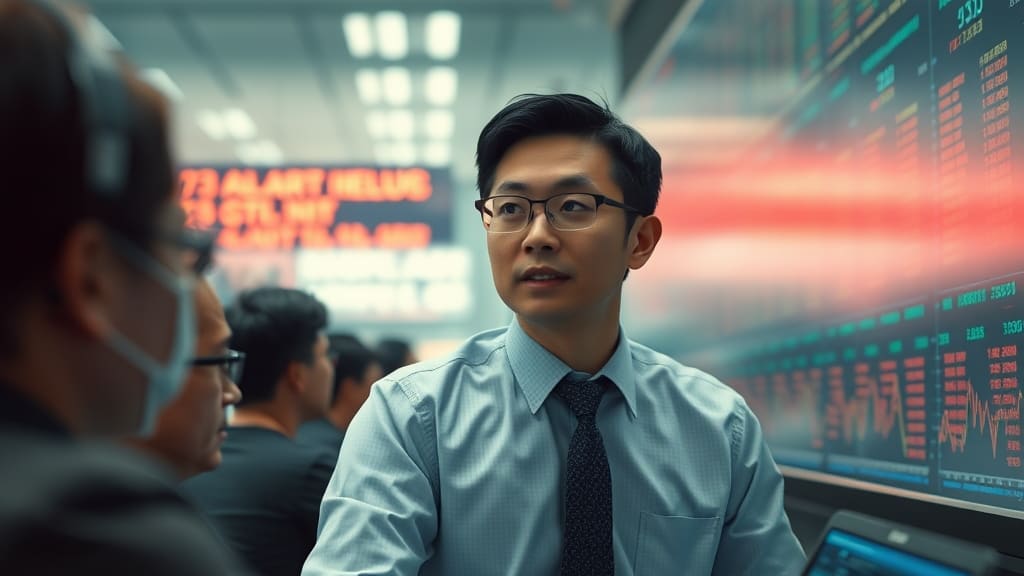
Historically, the dawn of every general-purpose technology has been accompanied by intangible disillusionment and astronomical capital consumption. The extreme fatigue facing today's artificial intelligence market is merely an inevitable rite of passage in this technological and historical cycle.
Core Content
1. The Emergence of Intangible Goods and the Economics of Intelligence
We remain trapped in the ancient primitive intuition of paying only for tangible goods. Just as the 18th-century steam engine converted motive power into standardized energy and distributed it to the market, modern artificial intelligence has transformed the intangible asset of 'intelligence' into a quantifiable, tradeable commodity in token units. Just as Thomas Hobbes advocated for social contract theory to turn the state of all against all into order, capitalism has now placed human cognitive labor itself on the boundary between standardized public goods and private property.
"The democratization of intelligence is granting all economic agents the permission to outsource their thinking."
Forming a precise parallel with how the past supply of electricity democratized humanity's physical muscle, the ongoing democratization of intelligence allows everyone to outsource thought. However, the general public remains unaccustomed to consuming this intangible service, which is the fundamental origin of the vague anxiety and exhaustion sensed in the investment field. A series of moves made by Jensen Huang on the G20 stage goes beyond simple technology promotion; it is close to a grand economic declaration to incorporate the invisible new currency unit of intelligence into the global hegemonic order. Just as energy is traded in watts, intelligence is now converted into tokens, and investors who fail to understand this massive economic paradigm shift face a structural phase where they will inevitably be pushed to the periphery forever.
2. The Gravity of Infrastructure and the Structural Hierarchy of the 5-Tier Cake
The historical lesson that countless transportation companies went bankrupt before the completion of infrastructure like railways and ports during the Industrial Revolution is the most perfect mirror for understanding the current AI infrastructure investment craze. A common error made by market participants is mistaking the tediousness of building physical foundations like foundry semiconductors and data centers for technological limits.
- Energy foundation and power supply
- Semiconductors and core hardware
- Data centers and cloud infrastructure
- Foundation models and AI frameworks
- Consumer applications and software services
The 5-tier cake metaphor repeatedly emphasized by Jensen Huang represents the harsh law of capital that explosive value creation in applications and data becomes possible only after the substructures of energy, semiconductors, and infrastructure are completely solidified. Current stock price volatility and the accumulated fatigue of investors are transitional phenomena where hardware investment performance in the lower tiers is being digested while the reality of the upper tiers has not yet materialized. This is why giant hegemonic nations like the US and China are trying to monopolistically control these five vertical layers, because the capital gravity dictates that whoever holds control of the lower layers will entirely capture the added value of the upper layers.
3. The Regulation of Ignorance and the Politics of Fear Hindering Technological Progress
Rapid technological volatility always breeds social anxiety, and political power often casts nets of excessive regulation using that anxiety as an excuse for control. Like the iron cage of bureaucracy pointed out by Max Weber, technology regulations packaged in moral rhetoric while ignoring substantive truths risk functioning as the most destructive toadstools gnawing away at the momentum of innovation. The subjects discussing the safety and responsibility of artificial intelligence must be a group of experts who understand the operating principles and ecosystem mechanisms of the technology down to their bones, and the ignorant intervention of politicians piggybacking on the primitive fears of the public can drive humanity into a state of civilizational lag.
The most tragic catastrophe is not the destruction of the Earth by side effects of technology, but the public being trapped in the fear of uncertainty and completely excluded from the benefits of productivity innovation brought by technology. The sentiment detected at the G20 summit was not the suffocation of technology through regulation, but a cold demand from capital that all political and institutional barriers blocking the commercial spread of intelligence must be torn down. Ultimately, the real threat facing investors and citizens wandering at the forefront of innovation may not be AI itself, but the chains of voluntary obsolescence created by collective ignorance that fears change. Can we brush away the fog of fatigue right before our eyes and proudly ride the giant wave of the age of intelligence that humanity has never experienced before?
This post is based on content from the YouTube channel 이효석아카데미.
Watch the original video: https://youtu.be/fiINV2VrfO4
Note: This content is a column written with AI analysis based on the referenced video. For accurate context and the creators intent, we recommend watching the video via the link above.

