Decoding the US Administration's Historic Purchase: The Real Threat Behind the Trade Deal
Discover why the US-China trade deal and its focus on low-tech products pose a hidden threat to global markets and traditional manufacturing.
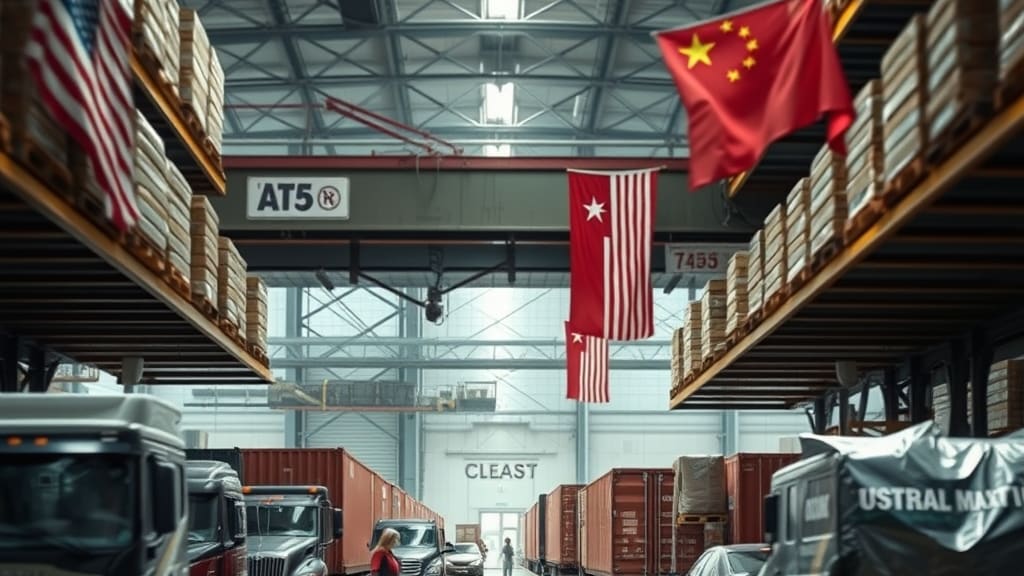
Just as the fall of a historic giant shakes the entire forest, secret deals between two superpowers always render the sandcastles of the global periphery powerless.
If we fail to face the reality of the massive strategic realignment hidden behind superficial handshakes, few will survive the upcoming turbulence in the capital markets.
Core Insights
1. The Facade of Expressions: The Dialectic of Conflict and Compromise
In political science, summit outcomes often fall into the irrational realm of being measured by leaders' subtle facial twitches and handshake intensities. Gone is the leader who, rattled by a single blow of rare earth export controls, could not hide an agitated response on social media; this meeting's atmosphere charted a distinctly different course. Past the peak of geopolitical conflict, both nations exchanged rhetorical gestures recognizing each other's systemic identities. From a Hegelian dialectical perspective, absolute confrontation inevitably moves toward a synthesis called a new form of compromise. The US must fulfill the immediate tasks of the MAGA project to revive domestic manufacturing, while China needs to transfuse the momentum of national revival from the outside to escape the swamp of long-term stagnation. Their interests appear diametrically opposed, but within the macroeconomic logic of survival, they converge into a bizarre, bedfellows-like compromise. Market participants try to judge this situation with a simple binary yardstick of good and bad news, but the reality is closer to a high-stakes diplomatic zero-sum game where massive empires seek points of compromise without completely choking each other. The Trump administration's anticipated historic purchase card is not merely a gift to improve the trade balance, but an invisible blade determining the future leadership of global supply chains.
2. Long-Term Sticky Interest Rates and the Brutal Polarization of Capital Markets
The bloodbath in the bond market is not just a temporary liquidity squeeze, but a headlight signaling that the global economy has fully entered a higher inflation structure. The fact that thirty-year yields continue to soar even after ten-year yields touched psychological resistance lines proves that long-term funding markets have yet to shake off anxiety over inflationary pressures. Inflation is not just a numerical fluctuation, but an invisible tax that deepens social inequality. The volatility of energy margins and the sustained rise in gasoline prices neutralize central bank expectations for rate cuts, steadily eroding the physical stamina of the real economy. Looking closely at the stock market, this macroeconomic pressure becomes even more stark.
While a small number of mega-cap tech stocks and AI-related infrastructure firms prop up the indices, an extreme polarization phenomenon has taken root where the vast majority of small-to-mid caps and traditional industries suffer continuous new lows.Memory semiconductors and processor-driven earnings improvements mask the market's overall sluggishness, but this resembles a raft precariously floating on waves rather than growth within a robust ecosystem. Capital is now concentrating solely on a handful of winners with safe havens and definite monopoly power, leaving the rest exposed to the cold blade of restructuring.
3. Low-Tech Products as a Trojan Horse and the Crisis of South Korean Manufacturing
The true focus of the massive upcoming purchases prepared by the US administration is not window-dressing items like agricultural goods or medical supplies, but tariff exemptions and opening measures toward low-tech electronics. Hegemonic nations that preached thorough containment and decoupling in high-tech fields like advanced semiconductors and AI are ironically extending a hand of compromise in the low-tech realm. This sends a fatal signal to export-driven intermediate-goods nations like South Korea. Until now, the Korean economy maintained a certain status in low-tech and mid-tech areas through the spillover effects of the US keeping China in check, but if both superpowers find a compromise here, the footing for Korean companies will instantly vanish. Because low-tech product groups have low barriers to entry and absolute price competitiveness, the moment low-priced Chinese goods backed by a massive domestic market are released back into the US market, the substructure of existing supply chains will inevitably collapse. This quiet concession hidden behind high-tech hegemony competition is no different from an invisible Trojan horse targeting South Korea's entire traditional manufacturing and subcontracting ecosystem. What investors and corporate executives should truly fear is not grand sanctions, but the crumbling of this inconspicuous low-tech domain.
- Shift from traditional low-tech business models to high-value innovations
- Abandon reliance on government protective barriers
- Closely monitor evolving regulatory environments and supply chain shifts
4. Paradigm Shift for Survival: Reinterpreting Geopolitical Risks
Amidst the rapidly changing geopolitical environment, past investment formulas are no longer valid, and a fundamental cognitive shift for survival is required. Xi Jinping's remarks suggesting the simultaneous success of both the US and China are more than mere diplomatic rhetoric; they imply that both nations have found a realistic compromise that avoids mutual annihilation and permits a kind of partitioned hegemony. Amidst this massive chessboard layout, South Korean self-employed business owners, mid-sized enterprises, and retail investors must discard complacent optimism and arm themselves with a cold look at reality. Companies that relied solely on low-tech traditional business models or government policy shields are now destined to completely transform their constitution or face elimination from the market. Capital no longer remembers borders or past glories; it moves only to areas that accurately decipher changing regulatory environments and supply chain niches. Whatever shock upcoming Monday announcements deliver to global markets, the crux is whether our industrial ecosystem will be reduced to consumables in the adjustment of imperial interests, or protect irreplaceable core values. Is the investment portfolio you are holding right now a sturdy breakwater against the waves brought by secret imperial deals, or a sandcastle waiting to be swept away in an instant?
This post is based on content from the YouTube channel 이효석아카데미.
Watch the original video: https://youtu.be/CAs3xXSzY98
Note: This content is a column written with AI analysis based on the referenced video. For accurate context and the creators intent, we recommend watching the video via the link above.

