Why US Long-Term Yields Keep Rising: The End of Fed-Driven Market Booms
Discover why the era of Fed-driven market booms is over and explore the structural shifts behind rising US long-term yields and global capital markets.
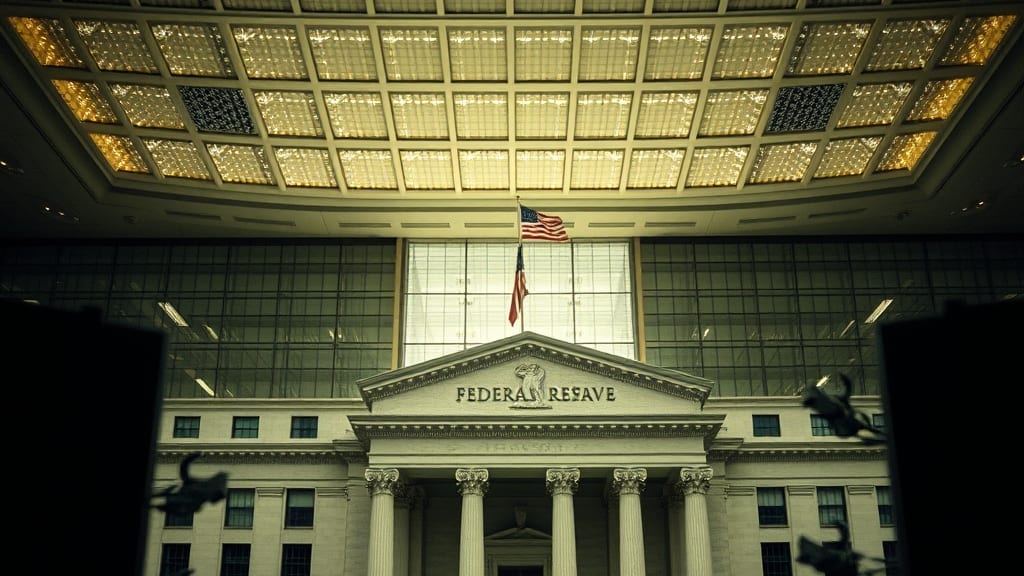
The season of optimism, when all asset prices trended upward on a single monetary easing signal from the central bank, has already receded into history. The market now faces a grim reality where it must confront the structural limitations hidden behind the illusion of earnings.
Structural Transformation of Capital Markets
1. The Collapse of Expectations and the Rise of New Realism
Historically, capital markets have always repeated cycles of blind infatuation and brutal awakening. Within the legacy of the past dominated by low interest rates, investors witnessed the miracle of asset values trending upward fueled solely by liquidity. The era when a single remark from a central bank chief caused government bond yields to fluctuate, allowing investors to easily ride those waves for excess returns, has now ended permanently. This fundamental transformation in the macroeconomic environment signifies much more than a mere shift in monetary authorities' policy stances. It is a massive structural pressure that forces a physical overhaul of how capital itself operates. Market participants can no longer sustain their portfolios by relying on vague, rosy futures or short-term liquidity inflows. Instead, they face the daunting task of rigorously verifying the actual value-creation capabilities hidden behind macroeconomic indicators. In this context, the current correction phase is not merely a drop in prices, but a grand rite of passage that capital markets must undergo to enter a more mature stage. The end of romantic investment theories signals the dawn of thorough pragmatism, which is becoming the absolute standard for reevaluating the fundamentals of individual companies.
2. The Harsh Test Facing the Korean Stock Market
The semiconductor industry, a representative pillar of the Korean capital market, has recently captured widespread attention by recording phenomenal operating profit margins. Yet, despite this numerical splendor, global investors' gazes remain cold. Just as one must check a partner's attitude during adversity rather than their smiles during peaceful times when choosing a true companion for life, the stock market is also being asked to prove its defensive capabilities during downturns. In the past, whenever the memory semiconductor cycle entered a downward trend, domestic companies often plunged into deep deficits. Although it is argued that current structural improvements differ from the past through long-term contracts and margin defense strategies, much is still lacking to fully satisfy foreign investors' expectations. True valuation re-rating derives not from explosive profit-generating power during booms, but from solid downside rigidity during recessions. The historical precedent where a Taiwanese foundry giant weathered a prolonged downturn, minimized margin volatility, and finally gained structural market trust offers profound lessons. If Korea's manufacturing-centric economic structure fails to simultaneously prove global-standard shareholder return policies and robust cycle defense, the discount factors denoting chronic undervaluation will not easily dissipate.
3. The Overinvestment Dilemma of Global Big Tech
The trajectory of global technology companies, another pillar of the market, also demands deep reflection. Riding the massive wave of the technological revolution called artificial intelligence, these firms are pouring astronomical funds into capital expenditures. However, when dissecting the numbers on financial statements coldly, a fundamental skepticism arises over whether these investments can serve as sustainable growth engines. Platform companies that traditionally generated high returns based on asset-light structures are now transforming into capital-intensive industries that must directly build massive infrastructure. The surging scale of assets deployed to generate one dollar of revenue implies a decline in investment efficiency, which can become a fatal stumbling block to enhancing long-term shareholder value. While management's aggressive vision-setting may elicit short-term cheers in the stock market, the market inevitably delivers ruthless judgment once the marginal utility of capital diminishes. The giant Capex (Capital Expenditure) cycle, where the tail wags the dog, inevitably leads to cash flow pressure, acting as a potential risk factor that severely undermines corporate financial flexibility in tandem with rising interest rates. Indiscriminate capital spending packaged under the name of innovation now rightfully deserves to be judged by the strict yardstick of return on investment.
4. The Future of Capital Markets Governed by New Rules
Consequently, today's investment environment may look like a ruleless space where past formulas are completely discarded, but in reality, it is a world governed by much stricter and more sophisticated new rules. The practice of generating profits by leaning on the artificial stimulus of central bank monetary easing has vanished permanently. Investors can no longer be intoxicated by rosy blueprints or temporary earnings surges presented by companies; instead, they must verify the essential stamina to survive even in the worst-case scenarios. To overcome the manufacturing-specific limitations of Korean stocks and ascend to the ranks of true advanced markets, transparent governance, consistent return policies, and profit-defense capabilities that cut through cycles must be proven simultaneously. At the same time, frontrunners of technological innovation leading the global economy are also stepping onto a grand testing ground to prove the efficiency of their excessive capital investments. In an era where the price of capital is high and the illusions of liquidity have faded, only raw capability remains. Are we truly prepared to look squarely at the structural risks lurking behind the glittering numbers before us, or are we still trapped in past glories, turning away from the massive waves of upcoming change?
This post is based on content from the YouTube channel 이효석아카데미.
Watch the original video: https://youtu.be/cXN93eY0_O4
Note: This content is a column written with AI analysis based on the referenced video. For accurate context and the creators intent, we recommend watching the video via the link above.

