Is a Trillionaire Imminent? Elon Musk and the Specter of the Dot-Com Bubble
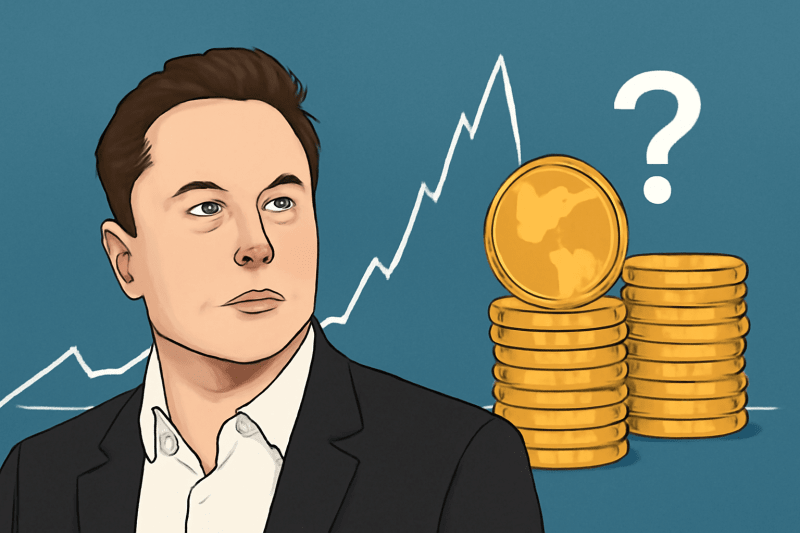
The Specter of the First Trillionaire Looms: Is Elon Musk on the Horizon?
Are we on the cusp of witnessing an unprecedented "trillionaire," while a familiar sense of unease permeates Silicon Valley? Investments of a magnitude unimaginable just a few years ago are now commonplace, yet the specter of the dot-com bubble's nightmare looms like a déjà vu. Is this the dawn of a new era, or a harbinger of another catastrophe?
Key Takeaways
1. Uneasy Champagne: Doubts Clouding Massive Investments
The news that OpenAI has secured $50 billion in funding, valuing the company at an astonishing $80 billion, is undoubtedly remarkable. However, a closer examination reveals that it might be too early to pop the champagne. Investments from Amazon and Nvidia are conditional, primarily in the form of cloud service credits and GPU provisions rather than actual cash. SoftBank's involvement also raises concerns about potential cash flow pressures and phased payments. While the total amount includes contributions from Microsoft, private investors, and smaller individual investors, analyses suggest that the proportion of actual cash inflow relative to the company's valuation falls short of expectations. This hints at the possibility of underlying weaknesses hidden beneath a glittering facade, akin to a hollow "red bean bun without the filling." Such a funding structure resembles a dangerous game of financial engineering, where current debt is increased by leveraging future profits. It shares similarities with the early stages of a Ponzi scheme, where new investors' money is used to pay returns to existing investors. Investors are betting on future potential value, but if that value fails to materialize, it could lead to a chain reaction of bankruptcies, echoing the indiscriminate investment frenzy of the dot-com bubble. The fact that OpenAI's secondary share sales are not progressing smoothly, while competitors like Anthropic are actively trading shares, further amplifies these concerns. Is OpenAI's immense valuation a reality, or merely an inflated illusion?
2. The Paradox of Technological Advancement: The Trap of Oversupply
Attributing the collapse of the dot-com bubble solely to overheated speculation is a superficial analysis. The argument that technological advancement itself acted as a catalyst for the bubble's burst is more compelling. Back then, massive investments were made in telecommunications infrastructure. However, breakthroughs in technology that dramatically improved internet traffic transmission efficiency meant that demand could be met with far less infrastructure than anticipated. This is akin to a situation where "a mountain village with scarce firewood is flooded with lumberjack experts who chop down trees with a 'thwack, thwack,' leaving an abundance of fuel." The overproduced infrastructure resulted in massive debt and led to a cascade of bankruptcies among telecommunications companies. Today, we are witnessing a similar pattern. Astronomical investments are being poured into GPUs, HBM (High Bandwidth Memory), and AI data centers. Yet, technologies like Google's 'TurboTOC' significantly reduce memory usage, achieving the same performance. Furthermore, powerful AI models like Google's freely available 'Gemini 4' enable high-performance responses with minimal memory. This is like saying, "No matter how many excellent knives you make, if everyone eats with chopsticks, the knife factory must close." The concern that increased software efficiency could lead to a faster-than-expected decline in hardware demand is reminiscent of the technological paradox during the dot-com bubble. Companies may find it increasingly difficult to create value based on "scarcity," while the burden of debt from massive investments could grow. This suggests that technological advancement alone does not necessarily translate into economic success, much like how "just because everyone has a boat doesn't mean everyone is a skilled sailor." This situation could serve as a powerful example of how past business models, which pursued expansion blindly under the guise of "economies of scale," can crumble so easily.
3. Psychological Pitfalls: Optimism and Herd Mentality
How easily can human psychology be swept away by collective madness? During the dot-com bubble, and even at this very moment, we are falling into the powerful psychological traps of "Optimism Bias" and "Herd Mentality." Coupled with the self-rationalization that "this time is different," we become captivated by the success stories of a few, harboring hopeful illusions of "I can be like them." It's similar to a gambler who, despite a losing streak, cannot stop dreaming of hitting the jackpot on the next turn. "Self-fulfilling Prophecy" further reinforces this psychology. When everyone is convinced of success, investment pours in, company valuations rise, which in turn strengthens the belief in success, creating a virtuous cycle. However, once this cycle breaks, it can lead to an uncontrollable fall. This aligns with the trap of "Rational Optimism," one of the root causes of the 2008 financial crisis. At the time, financial experts, despite recognizing the risks of derivatives, exacerbated the crisis with a complacent attitude, believing "this level of risk is acceptable." Today's optimism about the boundless potential of artificial intelligence technology is no different. In chasing only the positive future that technology might bring, it's easy to overlook the hidden risks and side effects. Under the guise of "positive thinking," we risk paralyzing our critical thinking abilities and becoming blind followers. These psychological factors exert an even stronger influence when combined with the "Scarcity Principle." The anxiety of "missing out on an opportunity if I don't invest now" leads to hasty decisions and stimulates loss aversion, prompting riskier investments. "Fear Of Missing Out (FOMO)" clouds rational judgment, ultimately leading to regrettable outcomes. It's like cliff diving: success makes you a hero, but failure means a plunge.
4. A Warning for the Future: Conditions for Sustainable Growth
In conclusion, the current situation in Silicon Valley strongly suggests the possibility of a dot-com bubble recurrence. OpenAI's funding methods, the risk of oversupply caused by technological advancements, and the vulnerability of human psychology are sending clear warning signals. However, this does not necessarily imply an inevitable catastrophe. Instead, it could be a crucial turning point for sustainable growth. Through the process of "Dialectical Development," the current crisis can become a stepping stone for new solutions and a better future. Just as the internet industry matured and developed more healthily after the dot-com bubble, the current bubble controversy can also serve as an opportunity to redefine the direction of technological innovation and build a more robust ecosystem. The key is insight – the ability to see beyond the superficial and grasp the essence. A balanced approach is needed, moving away from blind hardware-centric investments and considering software efficiency and ethical aspects. Furthermore, just as there was a mixture of vague fear and fantasy surrounding artificial intelligence after the 'AlphaGo Shock,' we must now realistically assess the potential of AI technology and thoroughly analyze its social and economic ripple effects. We need in-depth discussions not just about "Technological Determinism" and focusing solely on technological advancement, but also about how technology will interact with human society and evolve. This means that technological advancement alone is not enough, much like how "good roads don't guarantee a safe arrival at the destination." True innovation can only be achieved when technological advancement is harmonized with social consensus, ethical reflection, and sustainable economic models. As seen in the dot-com bubble where stock prices fell due to increased supply after IPOs, investments focused solely on short-term gains can ultimately lead to ruin. It is a time when a mature investment culture that evaluates the intrinsic value and social contribution of technology with a long-term perspective is desperately needed.
This post is based on content from the YouTube channel 이효석아카데미.
Watch the original video: https://youtu.be/aIxgM2cN78I
Note: This content is a column written with AI analysis based on the referenced video. For accurate context and the creators intent, we recommend watching the video via the link above.

