Elon Musk's "Space App Store": Beyond Rockets, Building a New Frontier
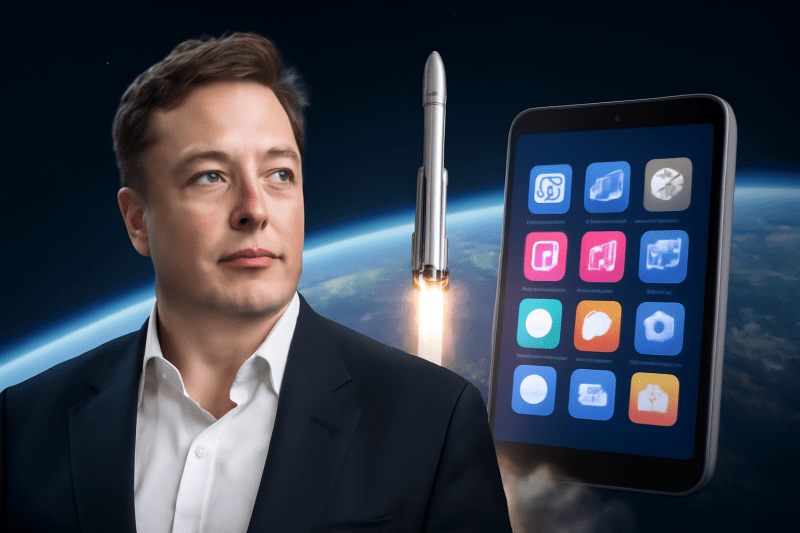
The World is Constantly Evolving, and Sometimes Innovation Begins in Realms We Can't Even Imagine. The Blueprint for the Space Age Being Drawn by Elon Musk Suggests Possibilities Beyond Mere Technological Leaps, Opening New Horizons for Human Civilization.
Key Takeaways
Paradigm Shift in the Space Industry: SpaceX Dreams of an 'iPhone' Moment
The dramatic reduction in the cost of accessing space by SpaceX goes beyond a simple transportation business. The goal of lowering the cost of sending 1kg to space from $10,000 to $100 with the completion of the Starship project is akin to the computing environment before the advent of smartphones. Just as there was no application ecosystem before smartphones, lowering the barrier to space access can accelerate the creation of space-based services and experiments—a "space app store." This will provide startups with opportunities to innovate in space, acting as a catalyst for the expansion of the entire space industry ecosystem. SpaceX is clearly demonstrating its ambition to lead this transformation and play the role of the "iPhone" for the space industry. The repeated successful reusability of rockets is a unique achievement by SpaceX alone, forming the basis for its strong competitive advantage in space transportation. While competitors exist, the technology and experience accumulated over many years are key differentiators for SpaceX. Coupled with this technological superiority, the assessment that they have already secured a significant portion of "land" in space solidifies SpaceX's leading position in future space resource acquisition and utilization.
Influence Beyond National Security: Starlink and Geopolitical Implications
Starlink satellite internet network has evolved beyond a mere communication service to exert influence on national security and geopolitics. Its potential to paralyze national functions during internet outages, as seen in the Ukraine war, demonstrates that Starlink has transcended the role of a simple private technology company. This situation clearly illustrates how technology interacts with real-world power structures, suggesting that control over communication networks leads to control over information access and delivery, directly impacting war-fighting capabilities. This ironically highlights the increasing importance of technology, especially communication and information technology, in modern warfare. Furthermore, Elon Musk, during the development of the electric vehicle industry, actively utilized government funding and regulatory easing to build infrastructure and secure charging station networks. This successful experience suggests he is building a similar leading position in the space industry, providing an interesting case study of how private companies can contribute to national infrastructure development and expand their influence. The ownership of 6,000-7,000 satellites is a result of this strategy, showcasing his ambition for resource preemption and utilization in space. These satellites have rapidly increased in number by utilizing leftover space from other launches, effectively at "no cost," demonstrating his business acumen in maximizing cost efficiency while simultaneously strengthening his dominance in space.
The Changing Face of Warfare in the AI Era and the Dual Role of Big Tech
Modern warfare is rapidly changing with the advancement of artificial intelligence (AI) technology. While AI plays a crucial role in enhancing war-fighting capabilities and gaining technological superiority, it also creates new ethical and geopolitical challenges. Just as events like the 9/11 terrorist attacks spurred the creation of big tech companies like Palantir, AI-based technologies are making warfare far more complex than in the past. While big tech companies providing technological support when a nation is attacked can be decisive in determining victory or defeat, it also suggests that these companies themselves could become targets. The threat of data center attacks further complicates this, raising fundamental questions about the role technology companies should play on the blurred lines between national security and conflict. While there are cases like Venezuela where conflicts were resolved relatively cleanly using AI technology, the conflict with Iran shows that AI intervention can also make situations more complex. We must not overlook the dual nature of technological advancement: it increases the efficiency of warfare while simultaneously amplifying the sustainability and unpredictability of conflicts. In this context, calls for an end to war are growing, but complex interdependencies and technological factors present significant obstacles to that process.
Expansion of Musk's Empire and Potential Risks: Coexistence of Synergy and Risk
Elon Musk's ambitious endeavors are accelerating the expansion of his "Musk Empire," centered around SpaceX. While the astronomical valuation of $2 trillion reflects SpaceX's potential, it also raises concerns about excessive valuation and questions about its growth prospects. Specifically, the integration of failed investments like Twitter (now X) and XAI into SpaceX could burden its originally profitable financial structure, a point that has been raised. This could act as a source of anxiety for investors during SpaceX's IPO process. While the ability to be included in an ETF 15 days after listing on the Nasdaq is positive, the absence of a "lock-up" provision for investor protection significantly amplifies the risk of stock price volatility. This suggests the possibility of large sell-offs immediately after listing, potentially undermining the confidence of prospective investors. Despite these risks, Elon Musk shows a commitment to pursuing long-term growth through synergy between SpaceX, XAI, and Tesla, even mentioning the possibility of integration with Tesla. However, just as his political moves have been analyzed as negatively impacting Tesla, his business strategies do not always guarantee success. The disconnect between Tesla buyers' political leanings and Elon Musk's political actions further highlights these potential risks. Can the "Musk Empire" overcome these risk factors and achieve sustainable growth?
This post is based on content from the YouTube channel 이효석아카데미.
Watch the original video: https://youtu.be/Rs_VnhnBG38
Note: This content is a column written with AI analysis based on the referenced video. For accurate context and the creators intent, we recommend watching the video via the link above.

