US Troop Surge: Escalation or Bluff? Next Week Could Decide Market Direction
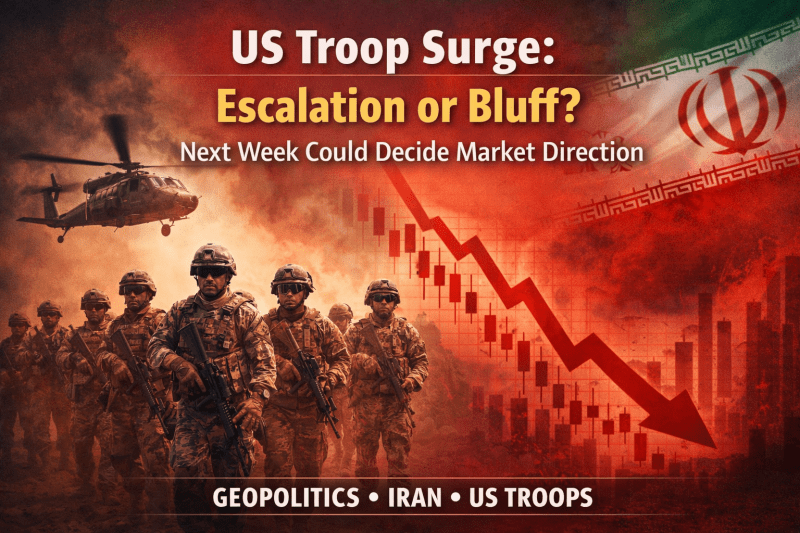
Human history has been a constant cycle of conflict and cooperation.
Human history has been a constant cycle of conflict and cooperation. Particularly, power struggles between major nations deepen geopolitical instability and create unpredictable ripples in the international community. The recent escalation of military tension surrounding Iran exemplifies this historical repetition, posing fundamental questions about the global economy and security.
Key Takeaways
1. The Shadow of Uncertainty: The True Intentions Behind Military Tensions
Since the end of the Cold War, the international order has become multipolar, yet the influence of certain major powers remains immense. Geopolitical crises arising in this context extend beyond mere regional conflicts, triggering cascading effects across the global economic system. Threats to energy supply chains, in particular, can inflict devastating blows on modern economies heavily reliant on oil. The recent tensions surrounding Iran can be seen as a result of these complex factors. While military buildups and threats are apparent on the surface, it is highly probable that underlying intentions include securing political negotiation leverage, strengthening domestic political support, and realigning regional power balances. Looking back at history, military actions have often been employed as a last resort when diplomatic negotiations reach an impasse, or as a strategic card to pressure an opponent. The decision to deploy military force is not merely about military efficiency; it is a highly political act that requires comprehensive judgment of complex variables such as international reaction, allies' positions, and domestic public opinion. Just as ancient Greek diplomats exhausted numerous diplomatic efforts before resorting to war as a last measure, modern leaders must also carefully consider military options. In particular, the unpredictable nature of certain leaders amplifies this uncertainty. The fact that their statements or decisions can change within minutes poses a serious obstacle to building trust in the international community. This uncertainty immediately creates anxiety in financial markets, leading investors to strengthen their risk-averse tendencies. Consequently, geopolitical tensions, beyond just the possibility of war, become a primary cause of reduced global economic predictability and the creation of an unstable environment.
2. The Solution to the Dilemma: Diplomatic Leverage and the Pursuit of Balance
In seeking solutions to these geopolitical dilemmas, we can recall classic game theories like the 'Prisoner's Dilemma.' When each actor seeks to maximize their own interests, a situation arises where all participants face unfavorable outcomes. The military tensions surrounding Iran can be understood in this context. Although military conflict would clearly result in enormous losses not only for the participating nations but also for the global economy, each country inevitably prioritizes its own security and interests. Therefore, to overcome this situation, resolving mutual distrust and building trust through diplomatic efforts are essential. International cooperation is urgently needed to strengthen diplomatic negotiation power and deter military conflict. Just as the United States and the Soviet Union attempted to manage the risks of mutually assured destruction (MAD) through nuclear arms control treaties during the Cold War, the current conflict situation requires active intervention from countries or international organizations that can play a reliable mediating role. Furthermore, multifaceted efforts to secure the stability of energy supply chains must be undertaken concurrently. Reducing dependence on energy supplies from specific regions and accelerating the development of alternative energy sources like renewables can be important measures to mitigate geopolitical risks in the long term. Just as ancient Rome maintained its road networks and public order throughout the empire to ensure a stable grain supply from its provinces, the modern international community must simultaneously secure energy security by building stable supply chains and managing geopolitical risks. These efforts will contribute to building a predictable and stable international order, going beyond short-term crisis containment. Ultimately, this is a time that demands the wisdom to utilize diplomatic leverage and pursue a balance in mutually beneficial directions, rather than relying on military force for resolution.
3. Implications: Navigating Through Uncertainty
The ongoing situation related to Iran demands deep reflection on the future that lies ahead. The question of whether history will repeat itself or if a new horizon will be opened extends beyond mere geopolitical analysis. This is because it is a test of how robust the international community's trust capital is, and how effectively international norms and order function. In particular, the ability to distinguish fact from fiction amidst an information deluge and to accurately understand complex international affairs is becoming increasingly important. We must go beyond simply focusing on the possibility of military action by a specific country and comprehensively analyze the political, economic, and social factors behind it. We must recognize that similar forms of power competition and attempts to expand influence are occurring today, just as European powers in the 19th century burned with imperialistic ambitions and divided the world. This competition inevitably breeds conflict, which in turn amplifies instability in the global economy. Therefore, we must not dismiss these geopolitical risks as mere external factors but consider their potential impact on our investment strategies, business plans, and personal lives. The uncertainty of future prediction will only grow, and in this environment, we must cultivate adaptability through flexible thinking and continuous learning. Will we avoid repeating past mistakes and forge a new path towards peace and prosperity? What choices will the international community make and be remembered for in history?
This post is based on content from the YouTube channel 올랜도 킴 미국주식.
Watch the original video: https://youtu.be/Yg-OA-UvJ0A?si=LGFG4-NewMLFEK7p
Note: This content is a column written with AI analysis based on the referenced video. For accurate context and the creators intent, we recommend watching the video via the link above.

