Strait of Hormuz Tensions: Trump's Next Move and Iran's Negotiation Stance
Key Takeaways
1. The Escalating Crisis: The Hormuz Dilemma
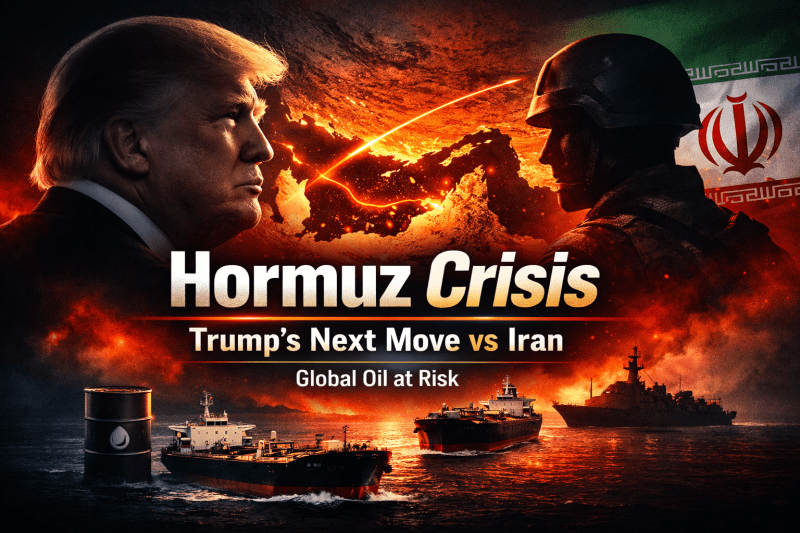
Like an uncontrollable wildfire, tensions surrounding the Strait of Hormuz are igniting the heart of the global economy. This isn't just about a geographical chokepoint; it's akin to severing a vital artery in the global supply chain. Much like the ancient Roman Empire sought dominance over the Mediterranean by destroying Carthage, or how the Balkan powder keg ignited World War I in the early 20th century, conflict here vividly illustrates how geopolitical risks can trigger immediate and destructive chain reactions in the real economy and financial markets. The surge in oil prices, surpassing $95 and heading towards $100, is more than just a numerical increase. It represents a direct burden on consumers at the pump, escalating production costs for businesses, rising logistics expenses, and ultimately, fueling inflationary pressures that drive up prices across a wide range of goods and services. This oil price shock presents a severe dilemma for central banks like the U.S. Federal Reserve. While needing to raise interest rates to curb inflation, the soaring oil prices introduce a complex variable, limiting policy flexibility. This creates a precarious economic situation, like walking on thin ice, holding a ticking time bomb. For President Donald Trump, the situation is even more complex. He faces the challenge of balancing his core "America First" agenda and maintaining economic growth with the need to curb Iran's nuclear ambitions. The diplomatic goal of pressuring Iran to halt its nuclear weapons program clashes with the reality of rising oil prices burdening the U.S. economy. Trump's past emphasis on preventing Iran from acquiring nuclear weapons has recently shifted, with him directly mentioning oil prices and urging interest rate cuts, demonstrating this dilemma. His overnight change in rhetoric suggests that the immediate economic fallout has become a more pressing issue than his political objectives. It's like a predator having to prioritize its own safety over its prey. The underlying calculation is that a collapse in economic stability could undermine his political foundation. His actions represent a sophisticated political maneuver, and perhaps an unavoidable choice, to balance intricate geopolitical issues with economic realities. Ultimately, as tensions around the Strait of Hormuz escalate, the Trump administration will be forced to walk a tightrope between diplomatic objectives and economic realities. This is not merely an issue of international relations but a case that exposes the fundamental vulnerabilities of the modern capitalist system.
2. Seeking Solutions: Finding Hope Amidst the Turmoil
Where can we find a way out of this vortex of chaos? Firstly, it's crucial to closely examine the results of the 30-year Treasury bond auction. The winning bid yield of 4.871% was higher than the previous average, and a low bid-to-cover ratio of 2.43 to 1 clearly indicates a lack of demand in the bond market. This suggests that investors are maintaining a preference for safe-haven assets while also feeling the pressure of high yields. It's like a hungry lion hesitating before its prey, fearing it might be poisoned. This weak demand will exert upward pressure on bond yields in the long run, creating a vicious cycle where rising yields lead to a decline in the stock market. The chart movements showing the 10-year yield rising and the S&P 500 index falling clearly illustrate this correlation. The surge in oil prices drives up interest rates, which ultimately dampens investor sentiment in the stock market. In this context, economic indicators are sending mixed signals. The lower-than-expected jobless claims suggest a resilient labor market, but improvements in the trade balance or GDP growth figures are insufficient to quell immediate market anxieties. It's like a faint ray of sunshine visible during a storm. These indicators have limitations in explaining short-term market movements, and investors must grasp market trends from a broader macroeconomic perspective. The empirical fact that the stock market struggles to rise when interest rates exceed 4.2% indicates that the current upward trend in interest rates is placing significant pressure on the stock market. Furthermore, the rise in the VIX index to 27, signaling heightened anxiety, warns that market volatility could increase in the short term. It's like the sky darkening before a thunderstorm, showing that market anxiety has reached its peak. Considering these complex factors, short-term pressures from interest rate hikes and geopolitical uncertainty are likely to persist. Therefore, a defensive portfolio strategy and increased cash holdings may be more effective than aggressive investment. It's like facing strong waves; it might be wiser to wait for the waves to pass rather than swimming aimlessly. Without negotiations with Iran or active intervention from the Trump administration, this market instability is likely to continue.
3. Implications: Questions for the Future
The geopolitical tensions surrounding the Strait of Hormuz and the resulting oil price surge are more than just economic phenomena; they are a mirror reflecting the structural vulnerabilities of modern society. Like ancient cities showing omens before their fall, this situation warns us of the instability of global supply chains and the severity of our energy dependence. The fact that Iran's leadership remains resolute in its intention to continue closing the Strait of Hormuz despite ship attacks, and that a significant number of missile launchers remain operational despite U.S. and Israeli airstrikes, suggests that this conflict will not be resolved quickly. It's like a persistent virus, posing a threat from unseen corners. Notably, the disruption in fertilizer shipments leading to soaring fertilizer prices is clear evidence that an energy crisis can spill over into food security issues. It's like a small crack in a dam eventually leading to a massive flood, causing unforeseen ripple effects. In this context, the Trump administration's diplomatic and military responses face increasingly complex calculations. Warnings from military officials that U.S. Navy ships escorting oil tankers carry immense risks underscore the gravity of the situation. It's like stepping into a den of wild animals. Therefore, if this crisis prolongs, it could cause even greater global economic turmoil, similar to the energy crisis during the Russia-Ukraine war. The mention of dollar strength and potential shifts towards a gold standard already indicates that this anxiety is spreading throughout the financial markets. It's like a final warning siren before a dam breaks. In the long term, this incident raises fundamental questions about the need to reduce reliance on fossil fuels and accelerate the transition to renewable energy. It also highlights the urgent need to strengthen risk management capabilities for geopolitical events and enhance resilience to external shocks by diversifying supply chains. It's like focusing on foundational work to build a strong house; it's time for fundamental structural improvements to prepare for future crises. Will we dismiss this crisis as mere economic volatility, or will we use it as a turning point for humanity's sustainable future?
4. Future Outlook: Navigating Through Fog
The market landscape ahead is shrouded in uncertainty, much like a ship navigating through fog. Projections suggest a general market downturn, with possibilities of the S&P 500 index falling to 6,500, the Dow Jones to 45,000, and the Nasdaq to 21,000. The analysis that the decline could accelerate if the Russell 2000 index loses its previous low point serves as a warning signal for small-cap investors. It's like the calm sea before a typhoon becoming rough; the market may be on the verge of a significant correction. The trend of the 10-year Treasury yield exceeding 4.2% and the 30-year yield rising to 4.88% suggests that pressure for interest rate hikes will continue. If interest rates remain at such high levels, it will be difficult for the stock market to gain upward momentum. It's like a sailboat rising against a strong headwind. The VIX index soaring to 27 indicates that investor anxiety has reached its peak, and the prospect that it might not form a peak until it surpasses 30 suggests that market volatility could persist for some time. In this situation, funds are likely to flow into safe-haven assets. The dollar is already showing strength, and while inflows into safe assets like gold have not yet fully materialized, they could occur at any time if market instability intensifies. It's like people flocking to a safe harbor when a storm approaches; capital will move to safer locations to avoid risk. The Strait of Hormuz tensions are unlikely to be resolved in the short term due to Iran's hardline stance and the Trump administration's complex diplomatic calculations. Therefore, market volatility is likely to continue through April and May, and investors need to approach with caution. It's a time that calls for gradual and careful investment, like moving slowly through dense fog. Unless negotiations with Iran are reached or the Trump administration takes decisive action, this unstable market condition will persist, and the market is likely to experience a roller-coaster ride of ups and downs. Ultimately, in this complex situation, how should investors manage risk and identify opportunities?
This post is based on content from the YouTube channel 올랜도 킴 미국주식.
Watch the original video: https://youtu.be/9dtFXbrmvO0?si=mVBBfIAGrArmQLsI
Note: This content is a column written with AI analysis based on the referenced video. For accurate context and the creators intent, we recommend watching the video via the link above.

