Strait of Hormuz Tensions Ease: Oil Prices Dip, Tech Stocks Rally - What's Next for Investors?
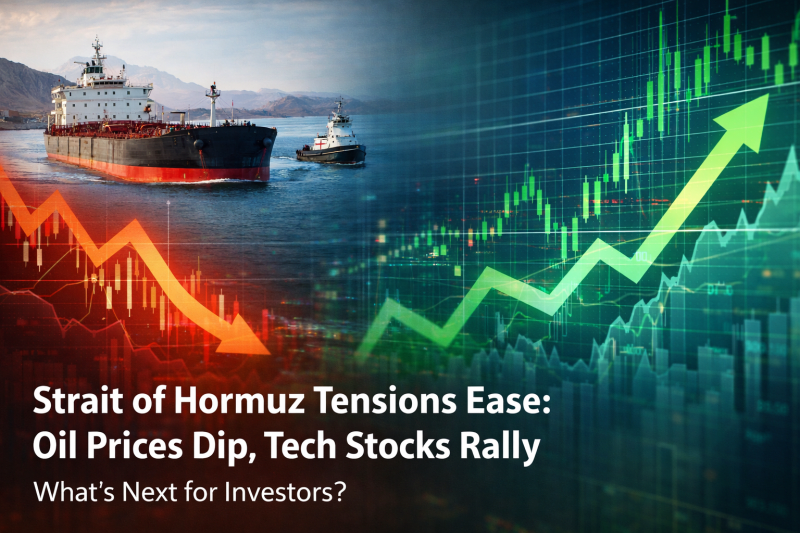
Like a stone dropped into a calm lake, the ripples of easing geopolitical tensions surrounding the Strait of Hormuz are pulling down international oil prices and injecting temporary vitality into the stock market. However, it's still too early to determine if this wave will become a giant tsunami or subside into gentle ripples. What should we glean from this wave of change?
The Dance of Volatility: Correlation Between Oil Prices and the Market
1. The Genesis of Oil Price Fluctuations: A Dance of Oil and Money
The wheels of history sometimes stop in unexpected places, posing crucial questions. The recent decline in international oil prices has been a rollercoaster for investors' nerves. One of the core drivers behind these price fluctuations is the easing of tension around the geopolitical linchpin known as the Strait of Hormuz. News of Greek and Indian merchant ships passing through this strait was like much-needed rain after a long drought, fostering expectations of normalization in the crude oil supply chain. This anticipation, coupled with the realistic possibility of increased supply, became a decisive factor in driving down international oil prices. This moment, akin to a predator briefly catching its breath, significantly impacts the modern economic system heavily reliant on oil. In a situation where fear of price surges due to even minor cracks in the supply chain was rampant, the symbolic event of the strait's passage offered a sense of relief to market participants. It acted like discovering a faint lighthouse in the fog of uncertainty. Consequently, these positive signals on the supply side led to a drop in international oil prices, which in turn became a driving force for the rebound in the stock market, particularly tech stocks.
2. The Ascent of Tech Stocks: The Divergent Ballad of Interest Rates and Oil
The market rebound triggered by falling oil prices is being led by tech stocks. This is not solely due to the impact of falling oil prices themselves, but is closely linked to the macroeconomic changes that falling oil prices precipitate. Expectations of easing inflationary pressures suggest a potential shift in central bank monetary policy, meaning increased anticipation of interest rate cuts. Historically, a low-interest-rate environment reduces companies' borrowing costs and increases the present value of future earnings, which benefits growth stocks, including Big Tech companies. The Nasdaq index, in particular, is leading this trend because technology companies tend to have high debt reliance and their valuations reflect expectations of future growth. Positive individual company news, such as anticipation surrounding Micron Technology's earnings report, excitement about Nvidia's GTC event, and Meta's restructuring announcement, have supported the tech-stock-led rally. It's as if the market found the treasure of tech stocks amidst the receding tide of falling oil prices. However, it's too early to definitively say whether this rebound signifies a sustained upward trend. The stock market often overreacts to short-term events, and a rebound in a situation where fundamental macroeconomic uncertainties haven't been fully resolved can quickly reverse into a downtrend. Therefore, we must maintain a cautious approach, closely observing the market's movements.
3. A Solid Defense Line, Yet the Leader Stumbles
Meanwhile, the relative decline of defensive stocks—companies in the defense, telecommunications, and utility sectors—which had previously driven the market, is noteworthy. This suggests a shift in market investor sentiment towards risk-seeking assets. During periods of high uncertainty, defensive stocks, offering stable cash flow and dividends, were attractive options for investors. However, with the detection of positive signals like easing geopolitical tensions and falling oil prices, investors have begun to shift their focus to high-growth tech stocks in pursuit of higher returns. It's like ships that sought refuge in a safe harbor during a storm setting sail again as the weather clears. However, this trend isn't necessarily entirely positive. The fact that major indices like the S&P 500 have not fallen significantly from their historical highs indicates that the market is holding up more resiliently than expected. This is a different pattern compared to the sharp declines seen in past bear markets. In the past, it took an average of 28 days for a 5% decline, 80 days for a 10% decline, and 245 days to enter a bear market of 20% or more. In contrast, even after more than 47 days, the current market hasn't even surpassed the 5% decline threshold. This suggests a steady inflow of buying pressure, indicating a possibility of shallower corrections than anticipated. Nevertheless, this prolonged period of adjustment can cause psychological fatigue among market participants and carries the potential risk of a sharp decline with even a minor shock. Therefore, we must pay attention not only to stock price movements but also to the underlying psychological factors and market structural changes.
4. The Shadow of Uncertainty: Trump's Calculations and Stagflation Fears
The future trajectory of former President Donald Trump and concerns about stagflation continue to amplify market uncertainty. The Trump administration has exerted military pressure and pushed for an end to the conflict by threatening attacks on Iran's oil facilities. Specifically, the possibility of an attack on Kharg Island, Iran's primary oil export hub, poses a potential risk that could skyrocket international oil prices. According to J.P. Morgan's analysis, approximately 90% of Iran's oil exports are shipped through Kharg Island. An attack on this location could immediately halt over 1.5 million barrels of oil exports per day, leading to a surge in international oil prices, making it a card the Trump administration would find difficult to play. However, historically, military tensions can unfold in unexpected directions, and former President Trump's unpredictability constantly injects tension into the market. To make matters worse, the prolonged Russia-Ukraine war is exacerbating energy supply chain instability and inflationary pressures, fueling concerns about stagflation. Stagflation, a worst-case economic scenario of simultaneous recession and inflation, can bring immense hardship to investors. These complex factors are major reasons weakening the upward momentum of the stock market and dampening investor sentiment. It's as if the market, like a ship lost in thick fog, is adrift amidst the vast waves of uncertainty. While the United States is making efforts to ease tensions, such as allowing Iranian oil tankers to pass, no one can predict when the war will end or how far its repercussions will extend. In such a situation, investors must make cautious investment decisions.
===ADVICE===Recommendations for the Future
Beware of Premature Optimism
The easing of tensions around the Strait of Hormuz and the subsequent drop in oil prices have undeniably acted as positive signals for the market. The rebound led by tech stocks seems to reflect this optimism. However, we need to view this phenomenon from a broader, historical perspective. There have been many instances in the past where geopolitical crises, after appearing to be resolved, have reignited, and energy supply chain instability is a potential risk that can resurface at any time. Furthermore, in a situation where fundamental macroeconomic uncertainties such as the possibility of interest rate hikes, inflationary pressures, and recession fears have not been fully resolved, it is dangerous to hastily interpret the current rebound as the start of a sustained upward trend. It would be wiser to meticulously check the weather forecast and make thorough preparations before embarking on a trip, rather than immediately setting off upon seeing clear skies. Investing is an act that requires a long-term perspective and cool-headed judgment. Rather than being swayed by short-term market fluctuations, it is important to establish and consistently execute a long-term investment strategy. Especially in a volatile market, it is essential to prepare for unpredictable risks through diversified investments and risk management. A dollar-cost averaging approach to blue-chip stocks may still be a valid strategy, but rather than applying it uniformly to all stocks, careful consideration should be given after thoroughly analyzing each stock's fundamentals and growth potential.
Past Data, Future Compass
To understand market movements, we often seek guidance by using past data as a compass. Statistical data, such as the average time it takes for the S&P 500 index to fall by 5% from its peak, the time to enter a correction phase, and the time to transition into a bear market, helps in understanding market patterns. This data suggests that the current market is behaving differently from past patterns, meaning the depth of the correction is shallower than expected, and its duration is lengthening. This could imply that market participants' selling sentiment is not as strong as anticipated, or that buying pressure is steadily flowing in. The historical fact that the U.S. stock market has not entered a bear market since World War II also serves as a basis supporting the current market's resilience. These analyses lean towards the possibility of time-based adjustments rather than a large-scale decline. However, history is not a simple repetition, and past statistics cannot be an absolute truth that perfectly predicts the future. We will constantly face new factors, such as new geopolitical variables, unexpected economic shocks, or the acceleration of technological advancements. Therefore, while referencing past data, we must be cautious about blindly relying on it. Instead, it would be a wise approach to identify the unique characteristics of the current market through this data and develop a flexible investment strategy. The path of investment is always like navigating through the fog of uncertainty. While past lighthouses can illuminate the future, the final direction of our voyage must be decided by ourselves.
Questions for the Future, and Our Choices
The signs of the fog lifting around the Strait of Hormuz are clearly casting a light of hope on the market. Oil prices have fallen, and tech stocks have regained vitality. But is this the beginning of a true upward trend, or just a brief pause? The political moves of former President Trump, the shadow of stagflation, and unexpected geopolitical variables continue to amplify market uncertainty. We analyze market movements through past data, critically assess the current situation, and strive to predict the future. However, ultimately, the final decision of investment is our own responsibility. It goes without saying that in a volatile market, maintaining risk management and a long-term perspective is crucial. However, how to apply these principles in practice, and what attitude to maintain in the face of an unpredictable future, remains a homework assignment for us. Ultimately, the market is constantly changing and evolving. How should we protect and grow our assets amidst these changes? Amidst rapidly changing international affairs and complex economic indicators, what insights must we cultivate to finally become wise investors?
This post is based on content from the YouTube channel 올랜도 킴 미국주식.
Watch the original video: https://youtu.be/oFmhoNwtUdc?si=wGRSgvCWJ8yMLke9
Note: This content is a column written with AI analysis based on the referenced video. For accurate context and the creators intent, we recommend watching the video via the link above.

