Saudi Arabia & UAE Shift Stance: Is a Wider Middle East Conflict Brewing Against Iran?
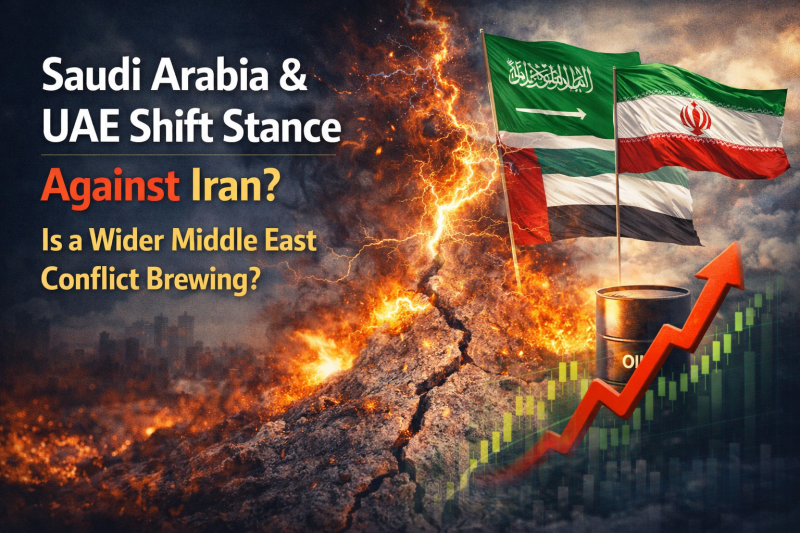
Amidst a darkening Middle East sky, tensions are stretched to their breaking point. The embers of long-standing geopolitical conflict are reigniting, with key nations like Saudi Arabia and the United Arab Emirates (UAE) potentially joining a full-scale confrontation with Iran. This could be a harbinger of a massive storm, extending beyond regional disputes to send ripples across the global economy and security landscape.
At the Center of the Storm: The Allies' Choice
1. Shifting Geopolitical Landscape: Saudi Arabia and the UAE's Strategic Realignment
Saudi Arabia and the UAE, once vocal proponents of Middle East peace and keen to avoid direct military clashes with Iran, are rapidly altering their positions. Previously, they were extremely cautious about their facilities or airspace being used in response to Iranian attacks, aiming to maintain distance. However, a series of retaliatory attacks by Iran has now pushed their sense of security crisis to an all-time high. This shift is not merely diplomatic rhetoric but is manifesting in concrete actions. A prime example is Saudi Arabia's agreement to allow the United States to use the King Fahd Air Base in the western part of the country. This is interpreted as a strategic decision that completely departs from their previous stance of not utilizing their facilities at the outset of a conflict. Crown Prince Mohammed bin Salman is reportedly seriously considering military action to restore deterrence, with some speculating that a decision to join the conflict is imminent. Foreign Minister Faisal bin Farhan Al Saud's statement, "Saudi Arabia's patience with Iranian attacks is not infinite," clearly illustrates this change in tone. The UAE is also escalating pressure by closing Iran-related institutions in Dubai and intensifying asset crackdowns to cut off the Iranian regime's funding sources. The fact that the UAE, which has served as a financial hub for Iranian companies and individuals for years, is even hinting at the possibility of freezing billions of dollars in Iranian assets could be a fatal blow to Iran, which is already facing economic difficulties due to sanctions and inflation. These changes in the Gulf states' positions can be seen not just as a response to regional conflict but as a move to redefine their own security and economic interests within a complex web of international relations. It's like a high-stakes chess match on a giant board, where each country's gains, losses, and strategic calculations are fiercely playing out.
2. The Dance of Oil Prices, The Trap of Geopolitics
Geopolitical instability in the Middle East has an immediate and massive ripple effect on international oil prices. The Strait of Hormuz is a critical chokepoint for a significant portion of global crude oil transport, and heightened tensions in this region directly lead to concerns about supply chain disruptions. In the past, instability in the Middle East has caused oil prices to surge, contributing to inflationary pressures on the global economy. In this context, the potential involvement of major oil-producing nations like Saudi Arabia and the UAE is highly likely to further amplify oil price volatility. Historically, oil prices tend to rise in the early stages of a conflict due to market uncertainty, but the impact varies depending on the nature and duration of the war. Some analyses suggest that such geopolitical shocks could lead to short-term market downturns but might recover or even present opportunities in the long run. However, in the current situation, the potential direct intervention of Gulf states could lead to repercussions on a different scale than before. The combination of the Trump administration's 'maximum pressure' strategy and Iran's military responses is expected to further intensify instability in the energy market. The surge in international oil prices is not just about increased transportation costs; it's leading to renewed fears of global inflation, which can influence central banks' interest rate policies and amplify volatility across financial markets. Energy supply chain instability is already a major hurdle for global economic recovery, and this will further threaten the economic security of the international community. Ultimately, the peace in the Middle East is not merely a regional issue but is directly tied to the stability of the global economy, a fact that is once again being underscored.
3. History Repeating Itself, or a New Beginning?
The series of events unfolding in the Middle East today might feel like a scene from an old play. Geopolitical conflicts, under-the-table competition for resources, and the intertwined interests of major powers create the illusion that history is repeating itself. However, faced with the repetition of history, we must pause and read the new variables hidden within. The unpredictable foreign policy of the Trump administration, Iran's counter-attack strategies, and the strategic realignments of the Gulf states are presenting a different pattern than past conflicts. In particular, the Iranian Revolutionary Guard Corps' move to strengthen control over the Strait of Hormuz directly threatens international trade and energy supply chains, carrying the potential to escalate beyond a mere regional conflict into a global security crisis. In this context, the change in stance by Saudi Arabia and the UAE holds the potential to fundamentally reshape the security landscape of the Middle East. In the past, the United States led security in the Middle East, but now, regional nations are actively moving to protect their own security and interests. This could accelerate the multipolarization of the international order and create cracks in existing alliances. Furthermore, as energy security and geopolitical risks become increasingly intertwined, future energy policies will involve complex political and military considerations beyond simple economic logic. In the face of these changing tides, can we truly build peace and stability, or will we fall into an endless cycle of conflict? The answer to this question is not determined by any single nation or power but is a point that requires the wisdom and effort of the entire international community.
This post is based on content from the YouTube channel 올랜도 킴 미국주식.
Watch the original video: https://youtu.be/gnDfSt_Absc?si=fhqx7IakVFQZqHxz
Note: This content is a column written with AI analysis based on the referenced video. For accurate context and the creators intent, we recommend watching the video via the link above.

